How Much Does It Cost to Sell Tickets Online in 2026?

The cost to sell tickets online in 2026 comes down to two things: a platform fee (anywhere from zero to 30% of face value depending on the platform) and payment processing, which is typically 2.9% plus 0.30 per transaction through Stripe or Square. On a 30 dollar ticket, total costs range from roughly 1.50 to 4.20 on low-fee platforms like Eventist, to about 4.10 on Eventbrite, to far more on marketplace giants like Ticketmaster. Free events cost nothing on most reputable platforms. Everything below is the real math on ticketing fees in 2026, including the hidden costs most fee pages leave out.
What Are the Two Fees on Every Online Ticket Sale?
Every paid ticket carries a platform fee and a payment processing fee, and understanding the difference is the key to comparing platforms honestly.
- The platform fee is what the ticketing company charges for its software: the checkout page, registration, check-in tools, and reporting. This is where platforms differ wildly: some charge a percentage, some a flat amount, some both.
- The payment processing fee is what the card networks and processor charge to move money. The industry standard is 2.9% plus 0.30 per transaction, and it exists on every platform, some show it separately, others bundle it into a bigger headline number.
When a platform advertises one low number, always check whether processing is included. A "2% fee" that excludes processing is really about 5% all-in.
What Does a $30 Ticket Actually Cost on Each Platform?
Running the same 30 dollar ticket through typical 2026 fee structures makes the differences concrete (our platform-by-platform fee breakdown for 2026 covers more vendors):
- Eventbrite: Eventbrite fees run roughly 3.5% plus 1.29 per ticket in platform fees, plus 2.9% payment processing. That is about 1.05 + 1.29 + 0.87 = 3.21 per ticket, or 10.7% of face value.
- Ticketmaster: service and facility charges are set per event but routinely add 20% or more to face value on consumer tickets: 6 or more on a 30 dollar ticket, mostly charged to the attendee at checkout.
- Humanitix: booking fees in the same general range as Eventbrite, with profits donated to charity.
- Eventist: per-ticket fees are a flat 0.85 CAD, never a percentage, plus standard Stripe or Square processing of about 1.17 on a 30 dollar ticket. About 2.02 all-in, and no setup costs or monthly minimums on top.
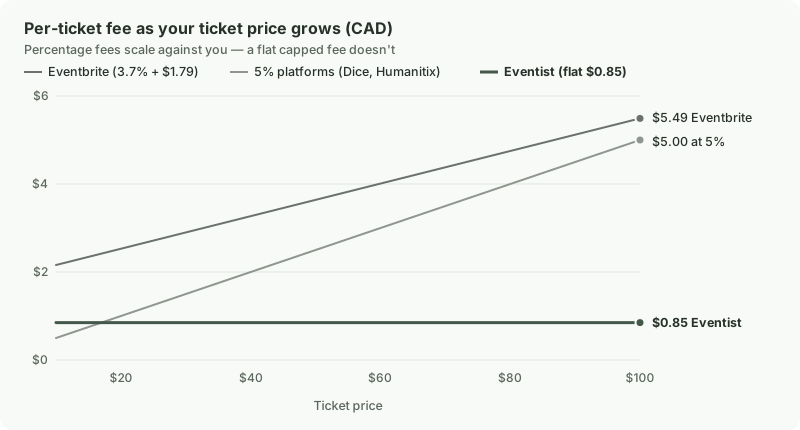
At 30 dollars the gap is already clear, and a flat fee widens it as prices rise.
Why Do Flat Fees Matter More at Higher Ticket Prices?
Percentage-based fees scale with your ticket price even though the platform's cost to process the order does not. A flat fee breaks that link. Compare Eventbrite fees against Eventist's flat fee (before processing, which is similar everywhere) at three price points:
- On a 30 dollar ticket: Eventbrite about 2.34, Eventist 0.85, you keep about 1.49 per ticket.
- On a 75 dollar ticket (a typical weekend pass): Eventbrite about 3.92, Eventist still 0.85.
- On a 150 dollar ticket (VIP passes, weekend bundles, workshop packages): Eventbrite about 6.54, Eventist still 0.85.
Where passes and packages regularly run 50 to 200 dollars, a flat fee compounds across hundreds or thousands of orders. An event selling 2,000 tickets at 75 dollars keeps over 6,000 dollars that percentage-based platform fees would take. Our guide to understanding ticketing fees goes deeper on fee structures.
Should You Absorb Fees or Pass Them to Attendees?
Most organizers pass fees to attendees, and on low-fee platforms that is usually the right call because the added amount stays small enough not to hurt conversion. The practical guidance:
- Pass on fees when they are modest. An extra 0.85 on a 75 dollar ticket is invisible. An extra 20% at checkout is not. That is the pattern that fills Reddit with abandoned-cart stories.
- Absorb fees for price-sensitive audiences or psychologically important price points (keeping a youth ticket at exactly 15 dollars, for example). Absorbing 3 dollars on a 30 dollar ticket costs you about 11% of revenue, so build it into the face price.
- Whichever you choose, show the total early. Fees revealed at the final checkout step are the single biggest driver of attendee resentment across every platform.
What Hidden Costs Do Fee Pages Leave Out?
The advertised rate is not the whole cost to sell tickets online. Four costs show up only after you have committed:
- Payout delays. Platforms that hold your revenue until after the event force you to float venue deposits, staffing, and production costs yourself. Platforms like Eventist that route payments through your own Stripe or Square account put revenue in your hands on the processor's normal schedule: typically days, not weeks.
- Refund fees. Some platforms keep their per-ticket fee even when you refund the order, so every refund costs you money twice. Check the refund policy before your first on-sale.
- Chargebacks. A disputed charge typically costs a 15 dollar processor fee plus the refunded amount. Clear event naming on card statements and a visible refund policy prevent most of them.
- Setup costs and minimums. Monthly minimums or onboarding fees turn a per-ticket price into a fixed cost that punishes smaller events. Eventist charges neither.
How Do You Minimize the Cost of Selling Tickets Online?
Three moves cut the cost to sell tickets online for most independent organizers:
- Pick a platform with capped or flat fees if your tickets cost more than about 30 dollars: the percentage math above shows why, and our ticketing fee comparison calculator runs it on your own prices and volume.
- Sell from your own website with an embedded checkout instead of relying on a marketplace listing. You keep the attendee data and the SEO value; our guide on how to sell tickets on your own website covers the setup.
- Run free events free. If you host free community events, workshops, or open houses, use a platform that charges nothing for them. On Eventist's event ticketing platform, free events are free.
If you want a line-by-line cost comparison for your specific event, book a call and we will run your numbers against any platform you are considering, or see how organizers in our event case studies made the switch without a monthly subscription.
Frequently Asked Questions
How much does it cost to sell tickets online in 2026?
For ticketing fees in 2026, budget for a platform fee plus payment processing of about 2.9% plus 0.30 per transaction. All-in costs on a 30 dollar ticket range from about 2.02 on Eventist (a flat 0.85 CAD fee) to about 4.08 on Eventbrite, and considerably more on marketplace platforms with attendee-side service charges.
Is it free to sell tickets for a free event?
On most reputable platforms, yes, Eventist, Eventbrite, and Humanitix all charge nothing for free events. Watch for platforms that impose monthly minimums or subscription costs, which effectively make free events cost money.
Who pays the ticketing fees: the organizer or the attendee?
Either, at the organizer's choice on most platforms. The common practice is to pass modest fees to attendees and absorb fees only for price-sensitive audiences or fixed price points. Displaying the total price early in checkout matters more than which side pays.
Are payment processing fees negotiable?
Not at typical independent-event volume: 2.9% plus 0.30 is the standard Stripe and Square rate. What you can control is the platform fee on top of it, which varies from a flat 0.85 on Eventist to 20% or more on major marketplaces.
Tags
Ready to simplify your events?
Join hundreds of organizers, studios, and festival directors who trust Eventist to run their events.