Food Festival Ticketing Software: A Practical Guide for 2026
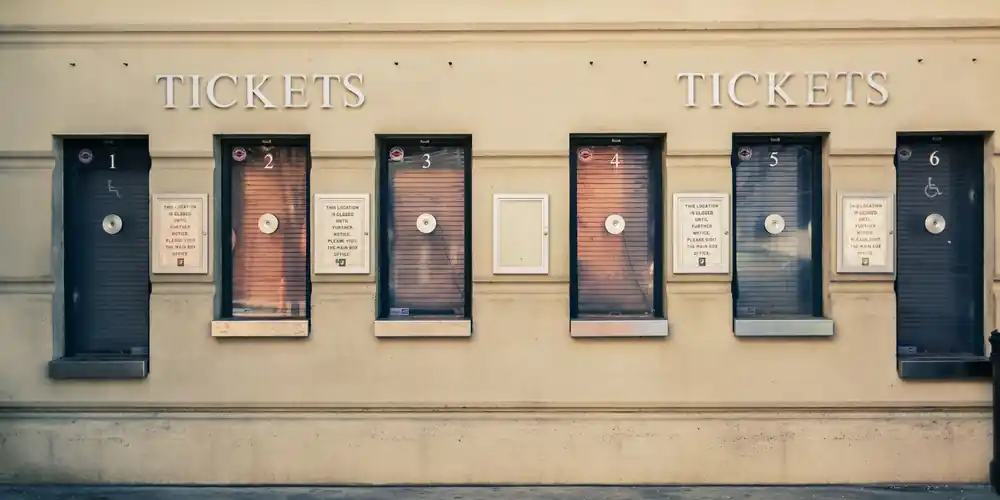
Food festival ticketing software has to solve a different problem than a concert or a music festival. Nobody is coming for a headliner; they are coming to eat, and the event lives or dies on whether the line at the dumpling stall is eight minutes or forty. That makes capacity the core job: timed-entry sessions that spread the crowd across the day, tasting tickets or tokens that keep vendors from handling cash, and a vendor map that gets people to the booth they came for.
This guide covers what food festivals specifically need from a ticketing platform, how tokens and cashless compare, and a shortlist of six platforms worth a demo. If you run a multi-day event with stages, our main festival ticketing comparison covers that side; this post stays on food.
Key takeaways
- Timed entry tickets for festivals are the single most important feature here. Two or three entry windows with their own caps turn a crushing noon peak into a full day of steady trade.
- Tasting tickets and tokens are a payment system, not a ticketing feature. Decide between vendor tap payments, tokens or a cashless wristband system first, then pick software that fits.
- Vendor booths belong on the same map attendees use to find them. Booth assignment and a public map save more support requests than any checkout feature.
- Health-permit tracking is usually a spreadsheet or a vendor application form, not a ticketing feature. Ask which fields the platform can collect at vendor sign-up.
- Door sales are a large share of food festival revenue, so a point-of-sale that sells the same ticket types as the website, against the same capacity, matters more than at a pre-sold music festival.
What food festival ticketing software needs to handle
Timed-entry sessions to manage capacity
A food festival's capacity is set by vendor throughput, not the size of the field. If forty vendors can each serve 120 people an hour, that is your real hourly cap, and the platform's job is to sell against it. Timed entry tickets for festivals do this by splitting the day into sessions, for example 11 am to 2 pm and 3 pm to 7 pm, each with its own price and cap, and each scanning as valid only inside its window. Look for per-session capacity, a clear session label on the ticket, and a check-in view that shows how many people are inside right now so you can decide whether to release more walk-up tickets at 1:30.
Tasting tickets, tokens and cashless
There are three ways to handle the money at the booth. Vendors can take tap payments on their own terminals, which is simplest for you but gives you no sales data and makes revenue-share agreements hard to verify. You can sell tasting tickets or tokens, online as a bundle attached to the entry ticket or at a token booth on site, which gives you the data and the float but adds reconciliation at the end of the night. Or you can run a cashless wristband or app-wallet system, which gives the best data and fastest lines but costs hardware, connectivity and refunds for unspent balances. Tokens make sense under a few thousand people where a $2 or $3 tasting portion is the main product; cashless vs tokens becomes a real question above that, when the token booth becomes its own line.
Vendor booths and the map
Food festival vendor management starts long before the map: an application form, menu approval, insurance and permit documents, booth fees and load-in times. On event day it becomes a map with booths, restrooms, water, seating and the token booth marked, ideally the same map attendees use to find the taco truck they saw on Instagram. Look for booth assignment on an interactive map, a public map that updates when you move a vendor, and a vendor view of their own booth and load-in window. A broader look at vendor tooling is in our comparison of festival vendor management software.
Health-permit tracking
A note rather than a section, because no ticketing platform tracks health permits properly. Public health units in Ontario, Quebec and BC require a special-event food vendor application per vendor, often weeks before the event, and the organizer is expected to have those on file. Collect permit numbers and expiry dates on the vendor application form, keep the documents in a shared folder, and treat the platform's vendor fields as the index, not the archive.
Door sales and walk-ups
Food festivals sell a lot at the gate on a sunny Saturday. That means a point-of-sale on a phone that sells the same session tickets as the website, counts against the same capacity and emails a QR code, plus a cash option. It also means a separate line for pre-purchased QR scans so online buyers are not stuck behind walk-ups paying by card. Our check-in operations playbook covers lane design and throughput numbers.
Six food festival ticketing platforms worth a demo
Top picks at a glance:
- Best overall for food festivals with vendors on a map: Eventist, for timed sessions as ticket types, vendor booths on an interactive map, phone QR check-in and a point-of-sale at a flat per-ticket fee.
- Best for simple timed-entry sales at low cost: Ticket Tailor, for a low flat fee and straightforward time-slot ticketing.
- Best for discovery reach: Eventbrite, for the largest consumer marketplace when the festival is new and needs to be found.
Pricing is as of September 2026; numbers are published Canadian rates, otherwise the model is described in words.
1. Eventist: best overall for food festivals with vendors on a map
Who it is for: food festivals from a few hundred to around 20,000 attendees that want ticketing, vendor booths and door sales in one system. What it does well: timed sessions are set up as separate ticket types with their own caps and scan windows, vendor booths are assigned on the interactive map attendees use for directions, QR check-in runs from any phone, the point-of-sale sells the same ticket types at the door, and staff and volunteer roles come with task management. Early-bird tiers, discount links, registration fields for vendor applications and abandoned-cart emails are included. The festival case study shows the map and scheduling side on a multi-day event. What to watch: no built-in cashless tokens or RFID wristbands, so tasting tokens are physical or a separate system, and no discovery marketplace on Eventbrite's scale. Pricing: flat fee per ticket, never a percentage, no subscription. General admission is $0.85 CAD per ticket; the festival package with maps, vendor and volunteer tools and live dashboards is $4.99 CAD per ticket with bulk pricing from $2.99; processing at Stripe or Square's own rate; free events are free.
2. Ticket Tailor: low flat fee with time-slot tickets
Who it is for: small and mid-size food festivals that mainly need timed-entry sessions sold cheaply. What it does well: a simple builder for time slots and capacities, an embeddable checkout and a basic scanning app. What to watch: no vendor management, map or point-of-sale, so door sales and booth logistics run on other tools. Pricing: $1.00 CAD per ticket flat pay-as-you-go, or $0.82 down to $0.40 per ticket on prepaid credits for higher volumes, plus payment processing.
3. Eventbrite: discovery reach for a new festival
Who it is for: first- or second-year food festivals that need to be found by people browsing "things to do this weekend". What it does well: the largest consumer marketplace in the category, multi-session support and self-serve setup. What to watch: a percentage fee, no vendor map or application flow, and paywalled add-on tools. Pricing: about 3.5% + $1.29 CAD per paid ticket before payment processing, as published for Canada.
4. Showpass: Canadian ticketing with box office hardware
Who it is for: Canadian food festivals that want a domestic vendor with box office hardware. What it does well: Calgary-based, CAD settlement, timed and multi-date tickets, box office sales and hardware rental. What to watch: vendor management and maps are not part of the product. Pricing: a percentage plus a fixed fee per ticket, passed to the buyer by default.
5. TicketSpice: flexible checkout forms for tastings and add-ons
Who it is for: organizers who want to sell entry, tasting packs, VIP seatings and merch on one customizable page. What it does well: form-style ticket pages with conditional add-ons, timed slots and a scanning app. What to watch: checkout-focused, so vendor booths, maps and on-site operations are outside its scope, and the flexibility means more setup time. Pricing: a flat per-ticket fee plus payment processing.
6. Humanitix: ticketing with profits donated to charity
Who it is for: community and non-profit food festivals that like the charitable model. What it does well: timed sessions, a clean checkout and a scanning app. What to watch: no vendor tools or maps, and a percentage fee that adds up on VIP tasting packages. Pricing: 2.1% + $0.99 CAD per paid ticket on its Canadian pricing page as of September 2026, 1% + $0.99 for charities and schools, plus Stripe processing.
How to choose
Decide the money model first. If vendors take their own tap payments, you need entry ticketing, timed sessions and a map. If you sell tokens, you also need a point-of-sale for token packs at the door. If you want cashless, budget for a dedicated system and pick ticketing that integrates with it. Then test three things in a demo: create two sessions with different caps and confirm a ticket for the first scans as invalid in the second; assign a vendor to a booth and check the public map updates; sell a session ticket on the point-of-sale and watch the capacity count move. For the planning calendar around all of this, see our festival planning timeline for 2027.
Frequently Asked Questions
How do timed-entry tickets work at a food festival?
You split the day into sessions, each with its own cap and price, and each ticket is valid only inside its window. Sessions keep vendor lines short, and a check-in dashboard shows how many people are inside so you can release walk-up tickets when a session has room.
Should I sell tasting tokens online or at the door?
Both, if the platform allows it. Online token bundles attached to the entry ticket raise the average order and cut the door queue; a token booth on site catches people who under-bought. Reconcile vendor token counts the same night.
Does food festival ticketing software track health permits?
Not properly. Collect permit numbers and expiry dates on the vendor application form and keep the documents in a shared folder; the platform's vendor fields work as an index. Health units need per-vendor applications weeks in advance, so start that list early.
What is the difference between cashless and tokens?
Tokens are physical credits redeemed at booths and counted afterwards; cashless is a wristband or app wallet that debits electronically and reports sales per vendor in real time. Tokens suit smaller festivals with cheap tasting portions; cashless suits larger events where the hardware cost is justified.
Can I sell vendor booths through the same platform?
Often yes, by creating a vendor booth as a ticket type with a registration form that collects menu, insurance and permit details, then assigning the booth on the map once approved. That keeps food festival vendor management in one record instead of three tools.
Food festivals win or lose on lines, and the best food festival ticketing software lets you control them: timed entry tickets for festivals, tokens or tap, and a map that gets people to the right booth. See how Eventist's festival ticketing and vendor tools handle timed sessions and booth maps, and if you are choosing between platforms on cost, our breakdown of festival ticketing fees compared puts the numbers side by side.
Ready to try it? Create a free Eventist account to set up your festival, or learn more about festival management and ticketing on Eventist.
Tags
Ready to simplify your events?
Join hundreds of organizers, studios, and festival directors who trust Eventist to run their events.