Volunteer Onboarding: Day 0–7 Templates for Nonprofit Events

Effective volunteer onboarding pairs a short orientation with staged role training and treats every new volunteer as a trainee from the first message. Your first action is simple: before anyone arrives, send a short welcome checklist and a concise role description. Below you will find a ready-to-copy checklist and a welcome packet outline for onboarding.
Key takeaways
- Complete waivers, emergency contacts, identification, and any role specific background checks before a volunteer’s first shift, explaining requirements early to prevent mismatches.
- For youth facing roles, screen applicants who will have contact with young people, train everyone with access to them on protection policies, and record completion.
- Match volunteers to roles by motivation and skills, assign a leader to every shift, and use a handover checklist to flag completed and pending work.
- Use role play, shadowing, and supervised practice, then confirm readiness with a brief knowledge check and competency sign off before independent shifts.
- Schedule early mentor check ins, recognize first shifts and milestones, and ask for feedback, since volunteers often leave when they feel underused.
What should your volunteer onboarding checklist include?
Work through these steps in order, from acceptance through the initial onboarding period:
1. Pre-arrival: send a welcome email with the date, location, parking and arrival time, links to your forms, and a short role summary.
2. Orientation day: cover the mission, tour the site, make introductions and finish admin.
3. Role training: pair the volunteer with someone experienced, share scripts, then assign supervised tasks and sign off on competence.
4. During onboarding: hold scheduled check-ins, name a mentor and collect feedback.
5. Ongoing: book refresher sessions and recognition checkpoints.
Keep each stage light enough to finish on time:
- Orientation items: mission refresher, site tour, introductions, forms.
- Training items: shadowing, scripts, supervised practice, sign-off.
- Check-in items: what went well, what felt unclear, what they want next.
Small, defined onboarding steps are a common pattern in volunteer guidance, which supports keeping your checklist short.
How is orientation different from training?
Orientation builds belonging. Training builds competence. Energize describes orientation as the head and heart of the experience and training as the skills, and notes that blending them often overwhelms new volunteers.
- Orientation covers: mission, values, history, logistics and admin.
- Training covers: task skills, safety procedures, role scripts and practice.
Run orientation first and keep it tight. Follow it with staged in-service training as the volunteer takes on real shifts. Anything that is not needed on shift one, such as advanced equipment or rarely used procedures, can wait for on-the-job training.
Pro Tip: Send the mission story and venue details before orientation, so the session itself can focus on people and practice.
What screening and paperwork should you finish during onboarding?
Collect the essentials before a volunteer takes a shift, and be upfront about them. The ACL volunteerism study recommends being transparent early about requirements such as background checks and training length, so mismatches drop out before you invest effort.
- Confidentiality agreements and waivers
- Emergency contacts
- ID and badging
- Background checks for roles that need them, with the reason explained plainly
For programs with youth contact, CDC guidance on preventing child sexual abuse says to screen all applicants who will have contact with youth and to train everyone with access to youth on child-protection policies. Keep a record of each completed orientation and training session. Requirements differ by jurisdiction, so treat this as general guidance, not legal advice.
How do you write position descriptions and match volunteers to roles?
A good position description is concise. Include:
- Hours and shift length
- Main tasks
- Skills needed or taught
- Length of commitment
- Who the volunteer reports to
Match people by motivation and skill, not just availability. A volunteer who wanted to meet people will struggle in a back-room sorting role, and one who prefers quiet work may dread the welcome desk. Practical disaster-response guidance from Points of Light suggests short position descriptions, volunteer leaders and shifts of a manageable length. Put at least one leader on every shift, and end each shift with a handover checklist so the next team knows what is done and what is pending.
How do you design training that volunteers will remember?
Make training interactive. Role-play common situations, let volunteers practise under supervision, and use shadowing and peer coaching. A CDC training handbook says effective training is interactive and routinely offered, and that logistics such as location, timing and refreshments matter.
- Room: sized for the group, with seating and quiet for questions
- Accessibility: step-free access, readable materials, captioning where useful
- Materials: printed role sheets, scripts, site map
- Timing: start on time and leave room for questions
For accessibility planning, this phased event accessibility checklist covers QR captions and related steps. To confirm readiness, use a brief knowledge check, a supervised first shift and a competency sign-off.
Pro Tip: Ask each volunteer to explain one task back to you in their own words before sign-off.
Which onboarding practices help you keep volunteers?
Retention starts on day one. Energize notes that volunteers are more likely to leave because they feel under-utilized than because they are overworked. The Urban Institute finds that retention depends on enriching the volunteer experience through screening, training, recognition and task matching, not just tracking hours.
Training and inclusion are positive, significant predictors of whether volunteers will volunteer again. In plain terms, volunteers who feel trained and included are more likely to return.
An evidence summary adds that satisfaction, role clarity and training correlate with higher retention.
- Send thank-you notes after the first shift
- Award milestone certificates
- Offer small branded items
- Schedule refresher sessions and collect feedback
- Show pathways to bigger roles
What goes in a welcome packet and a day 0–7 checklist?
A welcome packet keeps everything in one place:
- Welcome note from the coordinator
- Schedule and shift times
- Position description
- Site map
- Key contacts
- Forms and links
For free learning beyond your own materials, NonprofitReady lists free online courses for volunteer managers.
How can an event platform reduce onboarding friction?
Much onboarding pain is admin: chasing forms, rebuilding rosters, answering "where do I go?" messages. Our services cover staff roles, the run of show, scheduling, QR check-in from any phone and live maps, so volunteers' roles, shifts and arrival steps can live in the same system as the rest of the event. That can help keep event operations organized in one place. Our guide on streamlining volunteer management at festivals shows how this plays out in practice.
How do you bring volunteers into the wider event team and culture?
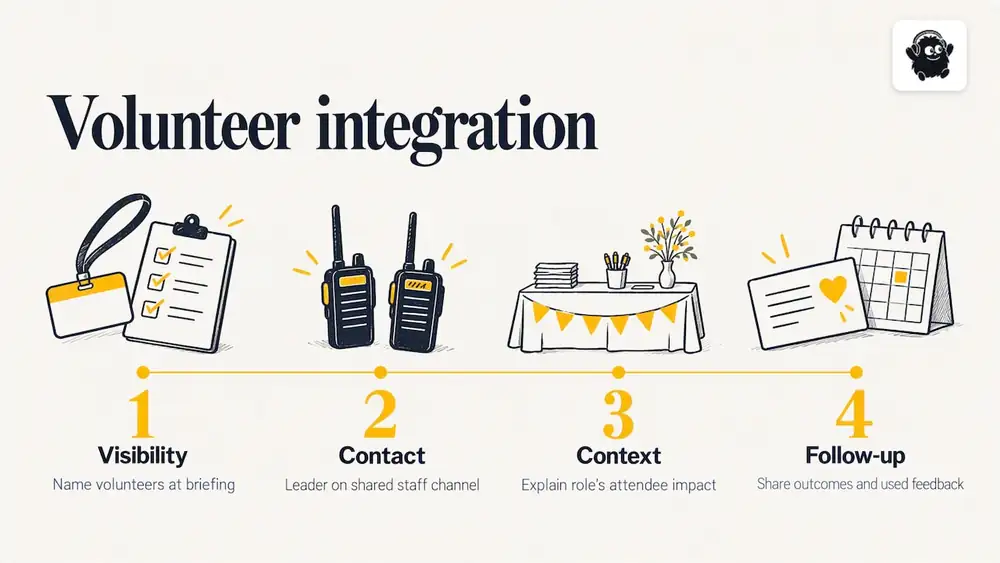
Integration is what turns a trained volunteer into a teammate. Start with visibility: introduce volunteers by name at the pre-event briefing, and tell paid staff members who they are and what they are covering. Volunteers who are treated as outsiders tend to act like outsiders.
Give volunteers a point of contact on every shift, ideally a volunteer leader who sits inside the same radio channel or chat group as staff. When volunteers can reach a decision-maker in seconds, they stop guessing and start solving.
Share context, not just tasks. A short note on how their role connects to the attendee experience, such as how the welcome desk sets the tone for the whole day, makes the work feel meaningful. Invite volunteers to the same pre-event meeting, meal or wrap-up as everyone else.
Finally, close the loop. After the event, share what the team achieved and what changed because of volunteer feedback. If a suggestion from a first-time volunteer shows up in next year's plan, tell them. Inclusion is easiest to prove when people can see their input being used.
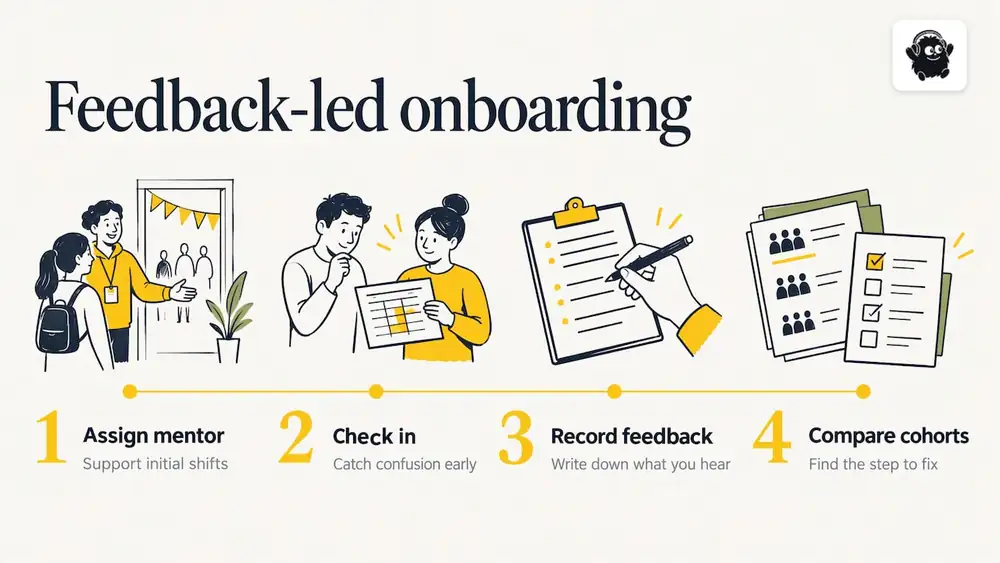
One habit worth building into every onboarding
Assign a mentor to support each new volunteer during their initial shifts, and schedule an early check-in. A mentor gives a new person someone to ask, which lifts confidence quickly, and the check-in catches confusion before it turns into quiet withdrawal. Write down what you hear and compare it across cohorts. Over a season, those notes show which step in your process needs fixing first.
Where one system can handle rosters and check-in
If spreadsheets are slowing your team down, an all-in-one event system can centralize staff roles, the run of show and QR check-in. These features are listed on our services page, and for paid ticketing, our per-ticket fees are on our pricing page.

Frequently Asked Questions
What should be on a volunteer onboarding checklist?
Include a pre-arrival welcome email with forms and a role summary, an orientation session, supervised role training with sign-off, and scheduled check-ins in the first week. Add a plan for refreshers and recognition so onboarding continues beyond the initial orientation.
What is the difference between orientation and training?
Orientation covers mission, values and logistics, and it builds belonging. Training covers task skills and safety procedures, and it builds competence. Energize notes that mixing the two often overwhelms new volunteers.
How long should volunteer onboarding take?
Keep orientation short and spread training over the first shifts rather than front-loading it. A staged onboarding plan gives volunteers time to practise and ask questions without overload.
Does volunteer training really affect retention?
Yes, the evidence points that way. A study of volunteer management found training and inclusion to be positive, significant predictors of volunteers' likelihood to volunteer again.
Sources
- Volunteer Management Practices and Retention of Volunteers
- Preventing Child Sexual Abuse Within Youth-serving Organizations:
Recommended
Tags
Ready to simplify your events?
Join hundreds of organizers, studios, and festival directors who trust Eventist to run their events.